Official product information
Maxforce Ingredients: The Nine Names on the Panel
All nine blend members in the order the panel prints them, each with the amount that order allows it.
Written and reviewed by the Maxforce Editorial Desk · Last updated October 29, 2026
Quick answer
Maxforce holds nine ingredients inside one 82 mg proprietary blend.
Caffeine, in row five, is the only one with a printed amount: 5 mg. Blend members are listed heaviest first, so row one is no more than 62 mg.
To see how they fit together, read how Maxforce works.
9 ingredients, one measured
Nine names, one printed amount, six rows you can pin down
The panel names nine and prints one figure. That figure is what makes this page possible.
The Supplement Facts panel on this jar declares one line that decides everything else on it: Proprietary Blend, 82 mg, and indented underneath it, nine ingredients. Muira puama extract, maca extract, catuaba extract, green tea extract, caffeine (5mg), ashwagandha, L-arginine, tribulus terrestris and horny goat weed extract. One number for all nine, and only the caffeine carries a figure of its own.
That is enough to work with. Because FDA requires blend members to be printed heaviest first, and because the fifth of the nine carries a figure, six of the nine rows come out of the panel with a hard number attached: caffeine at 5 mg because it is printed, the four rows below it at 5 mg or less because they are listed below it, and row one at no more than 62 mg.
9
1 of 9
6 of 9
82 mg
2 of 9
567 mg
5 of nine, photographed
Five of the nine rows, captioned with the bound
Five of the nine arrived as photographs, printed here in the panel’s own order. Each caption carries the bound rather than a figure, because no figure exists for any of them.
Scroll sideways. Five rows, captioned with what the label allows each one to weigh.
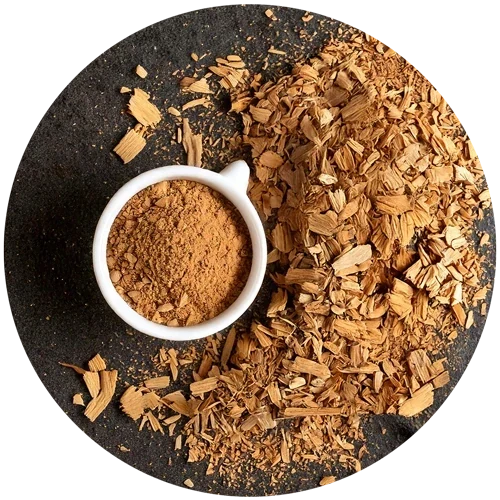
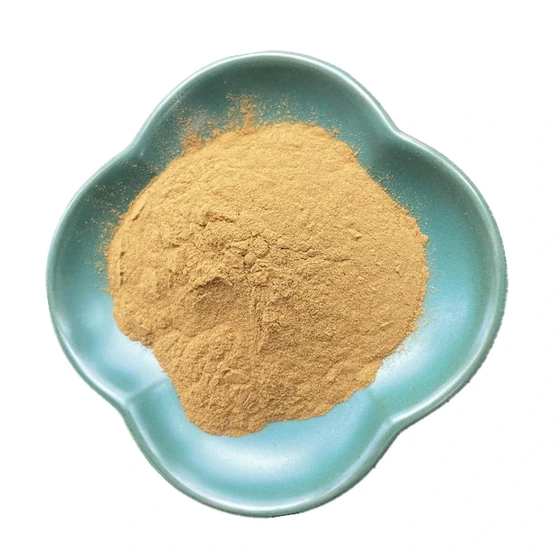
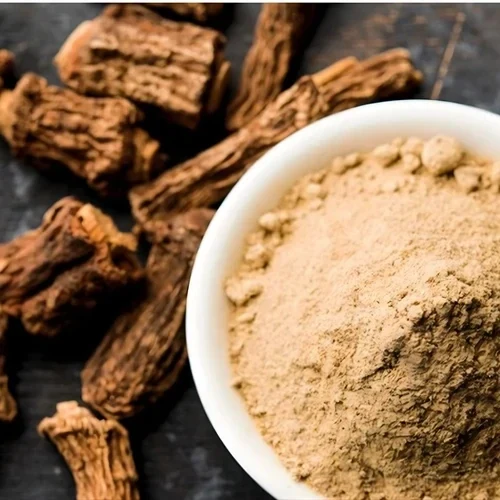
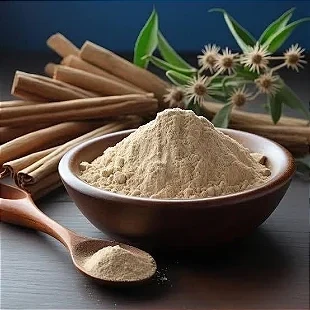
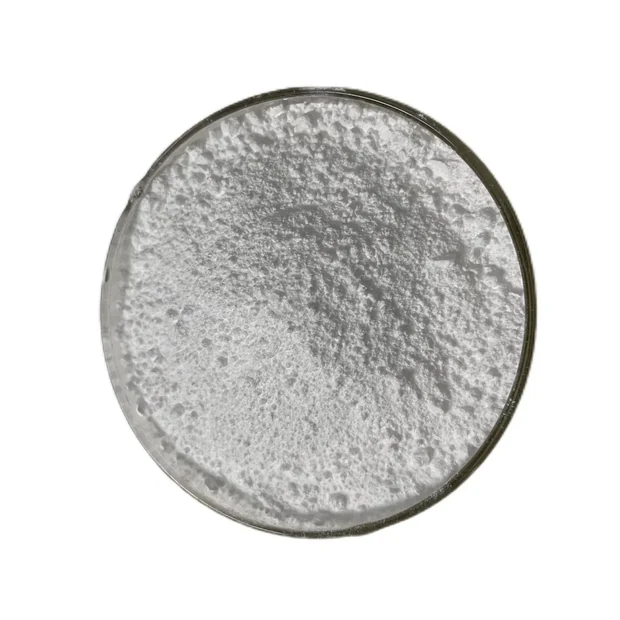
62 mg, the ceiling on row one
All nine, with the bound and with what each is sold for
All nine in the printed order, with what the trade sells each one for and what the label allows each one to weigh. Only the fourth column is derived, and the derivation is the same in every row.
| Row | As printed | What it is sold for | What the label allows it to weigh |
|---|---|---|---|
| 1 | Muira Puama Extract | Sold as “potency wood”, from the bark. | between about 14 mg and 62 mg |
| 2 | Maca Extract | Sold for energy and drive. In Peru it is a food. | between 5 mg and 62 mg |
| 3 | Catuaba Extract | Sold as a tonic bark. No species is printed. | between 5 mg and 62 mg |
| 4 | Green Tea Extract | Sold for antioxidants. Carries caffeine of its own. | between 5 mg and 62 mg |
| 5 | Caffeine | Sold for alertness, and the one figure on the panel. | 5 mg — printed |
| 6 | Ashwagandha | Sold for stress and testosterone. | 5 mg or less |
| 7 | L-Arginine | Sold for blood flow, through nitric oxide. | 5 mg or less |
| 8 | Tribulus Terrestris | Sold for testosterone and sexual function. | 5 mg or less |
| 9 | Horny Goat Weed Extract | Sold largely on its name. | 5 mg or less |
Only row five is printed. Rows six to nine are capped by it. Rows two, three and four carry a floor of 5 mg and no ceiling of their own below row one’s.
2 of 9 with a page of their own
Two of nine have a federal page. Five have none
A solid track means there is something federal to read. A hatched track means there is not.
Two of the nine have a federal consumer page of their own — green tea and ashwagandha, each with an NCCIH page and an NIH Office of Dietary Supplements fact sheet. Caffeine is covered by an FDA consumer update about the compound. L-arginine appears only inside an ODS fact sheet written for health professionals, about exercise. Five of the nine have no federal page at all.
The bar measures how much federal material exists for a buyer to read. A hatched track means none. It does not measure how well an ingredient works, and it cannot measure how much of one is in a gummy.
An empty shelf is a fact about what has been written rather than a verdict on the plant, and NCCIH says as much: “The amount of scientific evidence on dietary supplements varies widely—there is a lot of information on some and very little on others.” MedlinePlus ran a herb database covering several of these names and withdrew it on 29 July 2025.
3 rows at the top of the blend
The three heaviest rows, in full
Rows one, two and three are the three heaviest ingredients in the blend by the panel’s own ordering — and they are also three of the five with nothing federal written about them. Open each for what it is and what the label permits it.
Muira Puama Extract
The largest ingredient in the blend by the panel’s own ordering, and the one with the least federal information behind it.
between about 14 mg and 62 mg
Muira Puama Extract
The largest ingredient in the blend by the panel’s own ordering, and the one with the least federal information behind it.
Muira puama is the bark of an Amazonian shrub, sold in herbal tradition under the name “potency wood”. It is the first-listed member of this blend, which under FDA’s ordering rule makes it the heaviest.
It has no page on NCCIH’s Herbs at a Glance, no fact sheet in the NIH Office of Dietary Supplements botanical list, and no MedlinePlus entry. NCCIH’s page on this whole category does not mention it. There is no federal consumer information on this ingredient.
In Maxforce: between about 14 mg and 62 mg Reference: No studied amount is available from a federal source.
What can be said is structural rather than pharmacological: it is the biggest share of 82 mg, and 82 mg is the whole blend. Even the maximum the ordering rule permits it — 62 mg — is a small amount of a botanical extract.
Maca Extract
The best-known name on the list, and one of the five with no federal page.
between 5 mg and 62 mg
Maca Extract
The best-known name on the list, and one of the five with no federal page.
Maca is a root vegetable grown in the Peruvian Andes and eaten as a food there. It is the ingredient most buyers of this category have heard of.
It is not in NCCIH’s Herbs at a Glance index, not in the ODS botanical fact sheet list, and MedlinePlus’s herb database was withdrawn on 29 July 2025, which removed the one federal-domain place a consumer could look it up. There is nothing federal to read.
In Maxforce: between 5 mg and 62 mg Reference: No studied amount is available from a federal source.
Where maca is studied at all it is studied at gram amounts, because it is a food. The ordering rule caps this row at 62 mg and gives no figure below that; the panel does not print one.
Catuaba Extract
A Brazilian bark with two different plants sold under the same common name, and the label does not say which.
between 5 mg and 62 mg
Catuaba Extract
A Brazilian bark with two different plants sold under the same common name, and the label does not say which.
Catuaba is a Brazilian bark used in traditional preparations. The name is applied to more than one plant — commonly Trichilia catigua and Erythroxylum vaccinifolium — and this label prints the common name without a species.
No federal consumer page exists on any of the four sites. A common name covering more than one species, with no species printed, is exactly the situation NIH ODS describes when it says “Determining the quality of a botanical dietary supplement product from its label is difficult.”
In Maxforce: between 5 mg and 62 mg Reference: No studied amount is available from a federal source.
Absence of a page is absence of a page. What a reader can note is that this row is one of three whose share of 82 mg is bounded only between 5 mg and 62 mg.
4 rows below the caffeine line
Rows four to nine, and where the 5 mg cap bites
Green tea extract is row four, the last row above the printed figure, so at least 5 mg; NCCIH reaches no definite conclusion on it and none of its page concerns sexual function. Caffeine is row five at 5 mg, printed, and small beside the 400 mg a day FDA cites. Ashwagandha is row six, capped at 5 mg, against trials that use preparations dosed in the hundreds of milligrams. L-arginine is row seven and carries the widest gap on the panel: NIH ODS discusses it at two to twenty grams a day.
Tribulus terrestris is row eight, the one ingredient here with a positive randomised trial attached to it — alongside an earlier null one, which is why this site never prints either without the other. Horny goat weed extract is row nine, so the lightest thing in the jar, and it appears on neither the pack text nor the marketing card.
FDA does not require one inside a proprietary blend, so the label is within the rules. The distributor’s line is printed on the jar and the question is one line long.
Two things here deserve saying in the same breath. The nine are printed in full, legibly, in the order the rule requires — and the caffeine is itemised inside the blend rather than buried in the total. Without that figure, none of the bounds on this page would exist.
Questions
Maxforce FAQ: ingredients questions
What is in it?
One line on the panel: Proprietary Blend, 82 mg, holding nine ingredients — muira puama extract, maca extract, catuaba extract, green tea extract, caffeine (5mg), ashwagandha, L-arginine, tribulus terrestris and horny goat weed extract.
How much of each ingredient is there?
Only one is itemised: caffeine, at 5 mg. The other eight share the remaining 77 mg in proportions the panel does not print. That is legal — FDA requires a blend to print its total weight and the members in descending order of weight, not the individual amounts.
Which ingredients have federal information behind them?
Two of the nine. NCCIH has consumer pages on green tea and on ashwagandha, and NIH ODS has fact sheets for both. Caffeine is covered by FDA’s consumer update, and L-arginine appears inside an ODS health-professional fact sheet on exercise. Muira puama, maca, catuaba, tribulus terrestris and horny goat weed have no page at all.
What is muira puama?
The bark of an Amazonian shrub, sold in herbal tradition for potency. It is row one of nine on this panel, so it is the heaviest ingredient — somewhere between 5 mg and 62 mg. It has no federal consumer page.
What is maca?
A root vegetable grown in the Peruvian Andes and eaten there as a food. Row two of nine. Where it is studied it is studied at gram amounts, because it is a food. No federal consumer page exists.
References
Sources for this page
- U.S. Food and Drug Administration. Dietary Supplement Labeling Guide: Chapter IV, Nutrition Labeling. www.fda.gov. Accessed September 25, 2026.
- National Center for Complementary and Integrative Health. Green Tea: Usefulness and Safety. www.nccih.nih.gov. Accessed September 25, 2026.
- National Center for Complementary and Integrative Health. Ashwagandha: Usefulness and Safety. www.nccih.nih.gov. Accessed September 25, 2026.
- NIH Office of Dietary Supplements. Dietary Supplements for Exercise and Athletic Performance. ods.od.nih.gov. Accessed September 25, 2026.
- National Center for Complementary and Integrative Health. Herbs at a Glance. www.nccih.nih.gov. Accessed September 25, 2026.
Next
Keep reading
The 82 mg, and the arithmetic behind it
One printed figure, one ordering rule, and the working in full.
Read it →The panel, line by line
Calories, carbohydrate, sugar, sodium, the blend and every footnote.
Read it →What the federal record says
NCCIH on this category, and both tribulus trials rather than one.
Read it →See Maxforce on the official sales page
Nine ingredients in an 82 mg blend, one of them itemised, and six rows you can put a ceiling on. 30 gummies a jar, one a day, thirty days. 60 days from purchase to change your mind.
Price shown at checkout · 60-day window from the date of purchase · ships from inside the US · sales line +1 (302) 200-3480